



One of the most common interview questions is: “What are your salary expectations?”
Your answer can influence whether you move forward in the hiring process and how much you are ultimately offered. A well-prepared response shows that you understand the market, value your skills, and can negotiate professionally.
This guide explains the most common salary expectations mistakes, how to avoid them, and how to answer the question with confidence.
Why Employers Ask About Salary Expectations

Employers ask about salary expectations for several reasons. They want to know whether:
- Your expectations fit their budget.
- You understand the market value of your skills.
- You have researched the role and industry.
- Both parties can realistically move forward in the hiring process.
Your answer should balance confidence with flexibility.
Common Salary Expectations Mistakes to Avoid
1. Not Researching Salary Before the Interview
Many candidates guess a salary without researching current market rates. This can result in asking for too little or pricing yourself out of the role.
Before your interview, research salaries based on:
- Your industry
- Your location
- Your experience level
- The size of the employer
- The responsibilities listed in the job description
For South African roles, compare salaries using reputable salary platforms, recruitment firms, and recent job market reports rather than relying on a single source.
RELATED: Nasi ISpani Salary Estimator
2. Giving a Salary Figure Too Early
Avoid discussing salary before you understand the role.
Instead, learn about the responsibilities, reporting structure, and benefits first. This gives you more information before discussing compensation.
You could respond by saying:
“I’d like to understand the role and responsibilities first. Once we’ve discussed the position, I’ll be happy to talk about compensation.”
This keeps the conversation focused on your suitability for the role.
3. Giving One Exact Number
Providing one fixed figure leaves little room for negotiation.
Instead, provide a realistic salary range based on your research. Make sure the lowest amount is still acceptable to you.
For example:
“Based on my experience, the responsibilities of this role, and current market rates, I’m looking for a salary within the typical range for similar positions. However, I’m open to discussing the overall compensation package.”
Avoid quoting salary ranges unless you have researched the specific role and industry.
4. Asking for an Unrealistic Salary
A salary expectation that is far above market value can make employers question your understanding of the role.
Support your expectations by referring to:
- Relevant experience
- Professional certifications
- Technical or specialised skills
- Measurable achievements
- Leadership experience
Employers are more receptive when you explain the value you bring.
5. Ignoring the Full Compensation Package
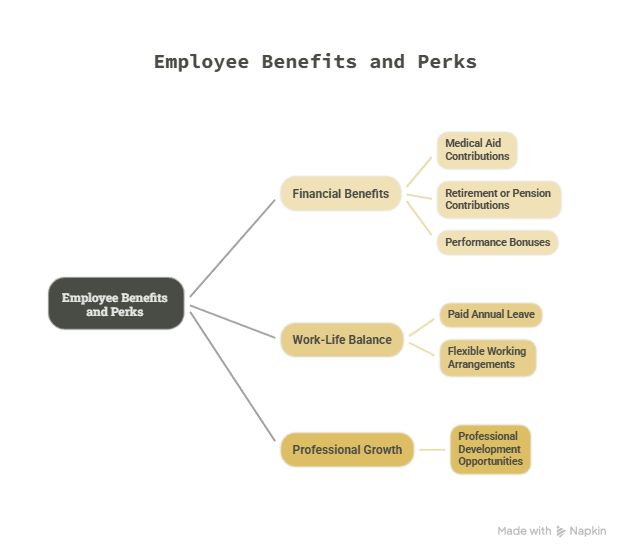
Salary is only one part of your total compensation.
Many employers also offer valuable benefits, including:
- Medical aid contributions
- Retirement or pension contributions
- Performance bonuses
- Paid annual leave
- Flexible working arrangements
- Professional development opportunities
Ask about the complete package before making a decision.
For example:
“I’d like to understand the full compensation package, including benefits and opportunities for growth.”
6. Not Preparing to Negotiate
Negotiation is a normal part of many recruitment processes.
If the offer is lower than expected, remain professional and explain your reasoning.
For example:
“Thank you for the offer. Based on my experience and the responsibilities of this role, is there flexibility within the salary range?”
This opens the conversation without appearing confrontational.
7. Reacting Emotionally to a Low Offer
A disappointing offer does not necessarily end the conversation.
Instead of becoming frustrated, ask questions such as:
- Is there flexibility in the salary?
- How are salary reviews conducted?
- Are there performance-based increases?
- Are additional benefits available?
Professional communication often leads to better outcomes.
8. Focusing Only on Salary
Career growth can be just as valuable as a higher starting salary.
Consider factors such as:
- Training opportunities
- Promotion pathways
- Mentorship programmes
- Company culture
- Work-life balance
- Job stability
Sometimes a role with better long-term prospects offers greater value than a higher initial salary.
9. Lying About Your Previous Salary
Some employers may ask about your previous earnings. If you choose to answer, be truthful.
Instead of exaggerating your salary, focus on why your experience justifies your expected compensation.
You could say:
“My previous role provided valuable experience. Based on the responsibilities of this position and current market rates, I’m seeking compensation that reflects the role and my skills.”
10. Forgetting That Salary Discussions Should Be Professional
Salary negotiations should remain respectful throughout the process.
Avoid:
- Making demands
- Comparing yourself with other candidates
- Giving ultimatums
- Accepting or rejecting an offer immediately without reviewing it carefully
Professionalism helps maintain a positive impression.
Salary Expectations Tips for South African Job Seekers
When discussing salary expectations in South Africa:
- Research current salaries for your industry and province.
- Understand whether the employer pays Cost to Company (CTC) or basic salary.
- Ask what benefits are included in the package.
- Consider transport, medical aid, retirement contributions, bonuses, and remote work arrangements.
- Base your expectations on the role rather than your previous salary.
Frequently Asked Questions
Should I give a salary range or a fixed amount?
A realistic salary range usually provides more flexibility during negotiations than one fixed figure.
What if I don’t know the market salary?
Research salaries before your interview using multiple reputable sources, recruitment salary guides, and current job listings for similar positions.
Should I negotiate salary?
Yes. If the offer is below your expectations, negotiate professionally and explain your reasoning using your experience and current market information.
What if the employer asks about my current salary?
Answer honestly if you choose to disclose it. Then explain that your salary expectations are based on the responsibilities of the new role and current market rates.
Should I only consider the salary?
No. Review the complete compensation package, including benefits, career development, and workplace flexibility.
Preparing your salary expectations before an interview helps you answer with confidence and professionalism. Research the market, understand the value of your skills, and remain flexible during negotiations. Most importantly, consider the entire compensation package rather than focusing only on the monthly salary.
Note: South African labour laws, including the Employment Equity Act and the Basic Conditions of Employment Act (BCEA), regulate minimum employment standards and prohibit unfair discrimination in the workplace. However, they do not prescribe salary levels for most private-sector roles. Salary negotiations are generally based on the employer’s budget, market rates, and the candidate’s experience.